

In my day job, I wear two hats. One is Community Engagement and Public Relations. The other is why I write to you today. I am also the Certified Arborist for a medium-sized municipality in Tennessee and I love talking about trees! In this week’s news cycle, two stories sprouted (pun intended) that I felt were interesting enough to write something more about.
Andrew Jackson’s Magnolias at the White House
Proving the provenance of a “witness” tree is a hard road to travel. Unless the history of the tree in question is well documented, knowing the who-and-when on planting can be nebulous. Such is the case of Andrew Jackson’s two Southern Magnolias on the White House grounds. Given their prominent place adjacent to the South Portico of the White House, there is plenty of evidence showing these trees in photographs back into the 1860s. There is no doubt of their age, but who actually planted them? Was it actually Jackson?
Rumor has it, Andrew Jackson planted these beautiful Southern Magnolias (Magnolia grandiflora) as memorial trees after the passing of his beloved wife, Rachel. According to the National Park Service website, the seeds of these two staples of the southern U.S. canopy were brought up from his home at The Hermitage in Tennessee. Rachel passed mere days after his election to the presidency in 1828 but prior to being sworn into office in 1829. Jackson loved her so much that he took a bullet to the chest in a duel to defend her honor** in 1806, a piece of lead he would carry next to his heart for the next thirty-nine years until he died in 1845.

(** It is said that Jackson called his opponent in the duel, Charles Dickinson, a “goat-sucking poultroon,” which to this day is my favorite 19th century insult!)
If the man carried a bullet for her next to his heart for thirty-nine years, it would not be a stretch to imagine he planted two memorial trees in her honor. It is also said Jackson loved Tennessee and missed it so much while in Washington, D.C., that bringing magnolias to the grounds would be exactly something he would do anyway to have a little bit of home at the White House. Based on their size and placement in the photographic evidence, the National Park Service determined these trees to be planted around the time of Jackson’s ascension to the presidency and gives him credit for the planting.

A spindly, magnolia tree next to the White House Southern Magnolia (left of center with silver trunk) (2023) photo credit: NPS / Kelsey Graczyk
If planted after Rachel’s death, let’s say around 1830 for a nice round number, that puts these two trees around 195 years old. Based on their location and regardless of who planted them, these trees have seen a significant amount of history. By virtue of their location, they are worthy of the title “witness tree.” On another thought, these trees, much like the man who is credited with planting them, took a proverbial bullet when a Cessna on a kamikaze mission took aim at the White House in 1994. These two magnolias took the impact of that Cessna crash, likely sheilding the property and possibly lives that the plane could have destroyed. Ironic that Jackson and his magnolia trees both took direct hits and still remained standing tall. However, now, in 2025, it would seem the trees have to come down.
The Love/Hate Relationship with President Trump, and why Tree Removal Decision is Unfair

This writing is not political. I’m not interested in your opinions on the current president, be it love him or hate him. This comes down to the trees, themselves. As an arborist, it is my job to evaluate trees on public property as a hazard or not. The National Park Service has many qualified personnel to to this same job way better than I can, but I’m going to weigh in on it anyway.
There is only so much that even the best arborists in the world can do to save a tree in decline. Most times, the best course is mitigate potential damage until you can’t mitigate it anymore. At that time, the tree, despite it’s long and storied history, must come down for the safety of all around it. I feel that the headlines surrounding this story in the news cycle have been terribly misleading and derogatory toward the president for the decision to remove these trees. Some of them sensationalize the story by saying “Trump to Chop Down Historic Trees,” or “Trump to remove Magnolias Planted at White House.” Even Fox News, who is historically favorable of Trump wrote a headline saying “Trump announces plan to chop down magnolia tree purportedly planted by Andrew Jackson: ‘Must come to an end’.” Those are unfair and misleading. For full disclosure, I would say this even if Kamala Harris had won the election. The decision is not political. It is plainly for safety.

What this should be is a teaching moment about the life cycle of an extraordinary tree. Trees are long-lived, but they are not forever. I have only seen pictures of these two, but I would come to the same conclusion that the NPS staff did. The tree is a hazard based on growth shape and surrounding conditions. The trunk has significant lean. It has been trimmed multiple times, almost more than it should have been before making the decision to remove it. The trunks still have lasting damage from the 1994 plane crash. Donald Trump did not decide to remove these trees. Time and circumstances did. We should honor the magnolias for their service, both figuratively and literally, as they are retired. On a happier note, trees can have long lives even after they are no longer in the ground or growing. President Trump stated that the wood from the tree “may be used for other high and noble purposes!!!” I hope so. Magnolia is not a great wood for wood work, however, a few staves could easily be turned into commemorative pens or some other decorative wood work that would honor the legacy and history of these trees, and honor Rachel Jackson for whom they were planted.

The Washington D.C. Cherry Blossom Festival
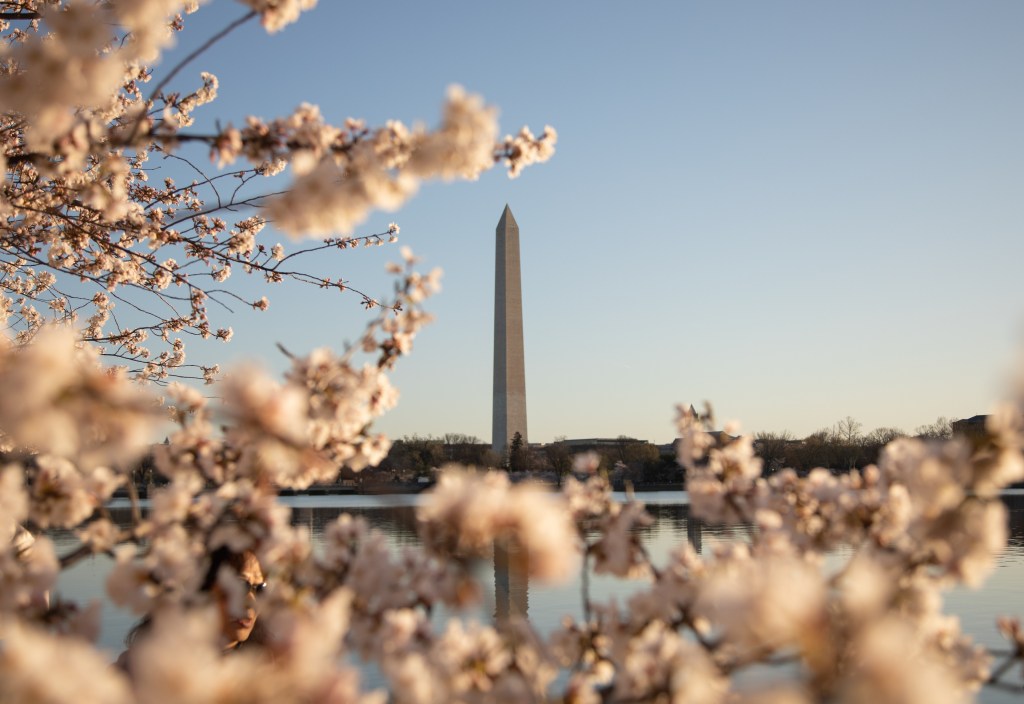
Each Spring, Washington D.C. is invaded by tourists for a reason besides politics. The annual Cherry Blossom Festival draws millions of visitors to our nations capitol to see the beautiful early blossoms of several species of cherry tree. These showy flowers last about a month and are a natural visual spectacle unmatched by any of the man-made monuments nearby. But how did this tradition begin? For that, we credit two ladies with grand vision.
According to the National Park Service website, Eliza Ruhamah Scidmore, a National Geographic Society board member, returned to the United States in 1885 following her first visit to Japan. She was on a trip abroad to visit her brother, George, who worked for the US Consular Service. During her time in Japan, she developed a great appreciation for Japanese culture, especially the beauty of the Japanese flowering cherry trees. She learned of a 1,200-year-old custom of viewing the cherry blossoms called “hanami,” and returned home with a desire to introduce this custom viewing the beauty of Japanese cherry blossoms to America.
Then, in 1912, First Lady Helen Taft planted the first two cherry trees in an area of Washington D.C. known as “The Speedway,” where she envisioned a grand park to be one day. This park would become today’s Tidal Basin, home to the annual Cherry Blossom Festival. What I find most interesting about this story is that Helen Taft did not assign this job of planting cherry trees to a gardener or staffer. Alongside the Japanese Ambassador to America’s wife, the Viscountess Chinda, these ladies rolled up their sleeves and planted the trees themselves! Ever since, first Ladies from both sides of the aisle have made it a mission of the office to promote, and to plant, cherry trees for the festival.
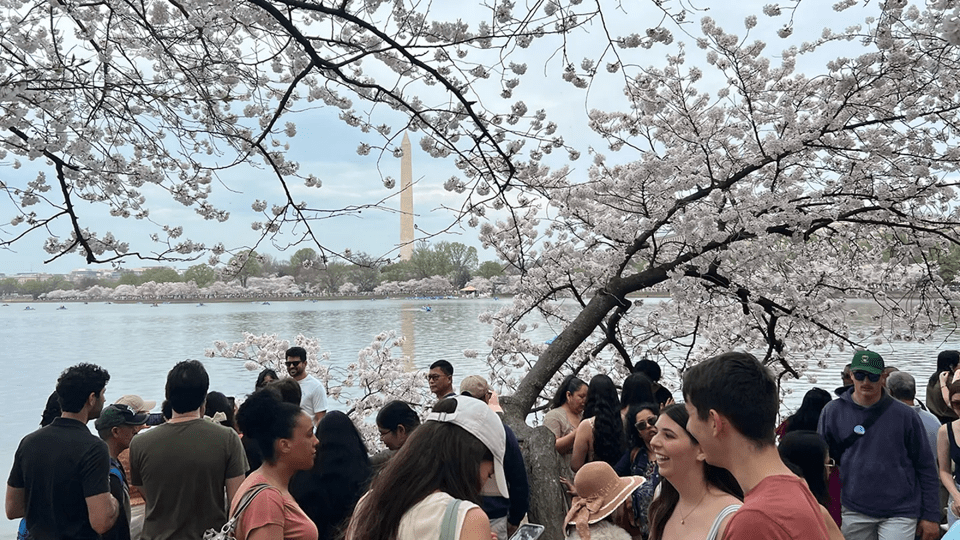
Since First Lady Taft and Viscountess Chinda got down in the dirt and planted those first two Yoshino cherry trees, the Cherry Blossom Festival has endured for over 100 years. But now, in 2025, attitudes towards these beautiful trees have shifted and some want to take some blossoms home with them rather than bask in their splendor. Now comes the ethical question that any lover of nature lives to lecture about…
Cherry Blossoms: To Pick, or Not to Pick?
Fox News decided to start asking people at the 2025 festival if they were aware of any legal penalty for picking the blossoms. Answers varied wildly from “yes,” to “no,” to “I don’t know,” to “I just took a couple, there is plenty,” to “I just touched it, is that illegal?”. So, what is the right answer? If it’s living, should you pick it? What’s the harm in just taking one blossom, right? Can you take home a cherry blossom from the festival? Well, the NPS decided to weigh in with the correct answer.
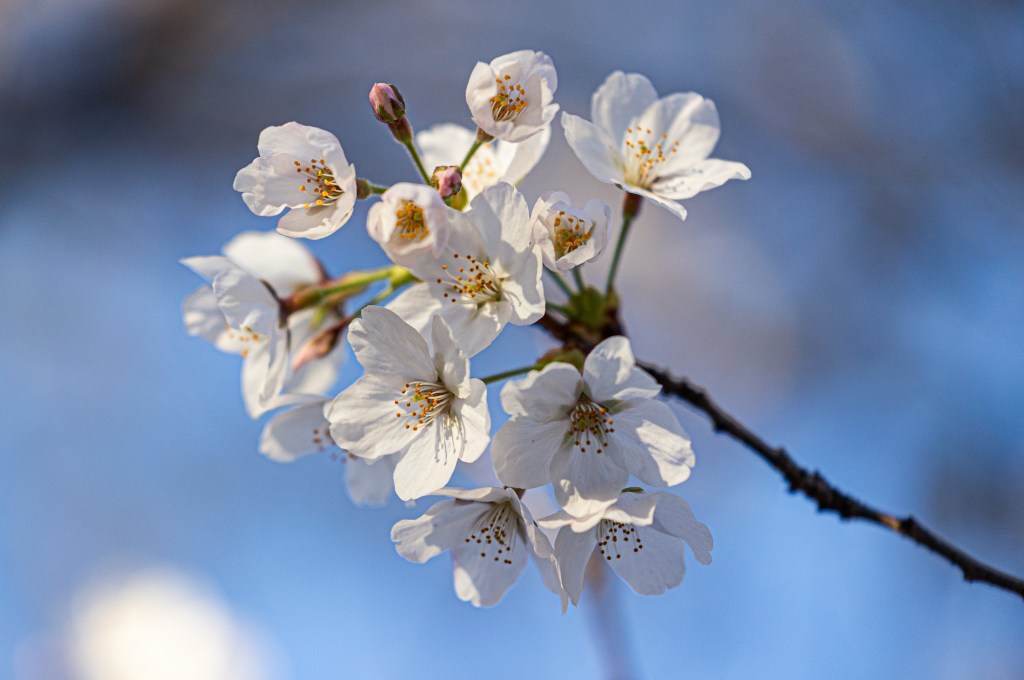
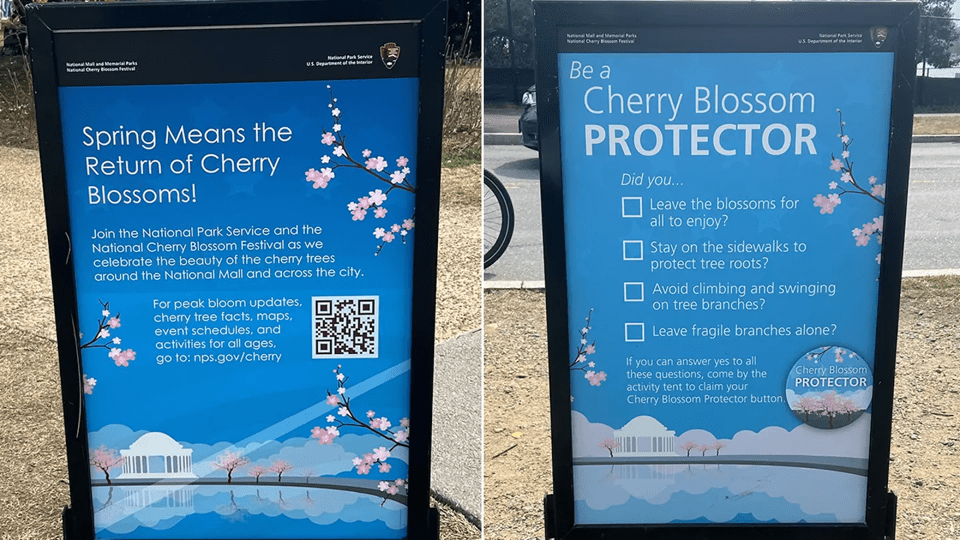
The US Code under §1865 National Park Service states that there is a penalty for “offenses relating to structures and vegetation.” The code states that an offender, in this case, a Cherry Blossom Picker, could be “imprisoned not less than 15 days nor more than one year, fined under this title but not less than $10 for each monument, statue, marker, guidepost, or other structure, tree, shrub, or plant that is destroyed, defaced, injured, cut or removed, or both.” So, unless you’re prepared for a few nights in the Grey-Bar Hotel or to shell out ten bucks per blossom, DON’T DO IT! Seriously, don’t. Don’t pick them. Leave them for others to enjoy and reminisce in the memory of having experienced the splendor of the blossoms. If you REALLY want to take the experience home with you, take the suggestion of this arborist and do one of the following two things:
First, if you own property or have a yard, find a local nursery and purchase a cherry tree to plant at your place. A tree nursery or even a local home store like Lowe’s or Home Depot will likely have cherry trees available. I recommend the nursery route first to support local businesses and growers. Get a tree, put on your best Helen Taft and Viscountess Chinda dress, and go get dirty. Planting a tree is a rewarding and noble experience everyone should do at least once.
Second, if you do not own property or have a yard, go visit your local parks department. If you’re willing to purchase a tree, I can guarantee they will plant it in a park for you and for others to enjoy. I know because I have done it and continue to do it to this day. Between the 2024 and 2025 planting seasons where I live in Zone 7, I have installed 106 trees on public property, 24 of which were purchased by others for memorial plantings. One of those plantings I purchased myself as a memorial for our lost pets.

A tenet I learned as a young Boy Scout in the early 80s was “if something is green, do not cut it.” I would say that also translates to “don’t pick it” either. Then there is a famous saying of “take only pictures, leave only footprints.” I still live by this today, and in my arborist role, I get to put it into practice. However, much like Jackson’s magnolias, sometimes something green does need to be cut. Keep in mind, it is not cut with malice or destruction as the objective. Like the mythical phoenix, sometimes something must pass on so something more beautiful can rise from its ashes. I, for one, can’t wait to see what gets planted next, both at the White House and at your house.
Sources:
National Park Service: https://www.nps.gov/whho/learn/historyculture/jackson-magnolia.htm
National Park Service: https://www.nps.gov/subjects/cherryblossom/index.htm
Lyle is an ISA-Certified Arborist in Tennessee.
 Lyle S. Russell
Leave a comment