
For a class I am taking, the requirement is to write three poems for group critique. Folks, I am not a poet. Also, I am not usually drawn to poetry when I have the time to sit down and read. Not that there is anything wrong with it. Quite the contrary. I think poetry is great, just not really my thing. Then I started to write some and I think my mind is changed.
Well, sort of.
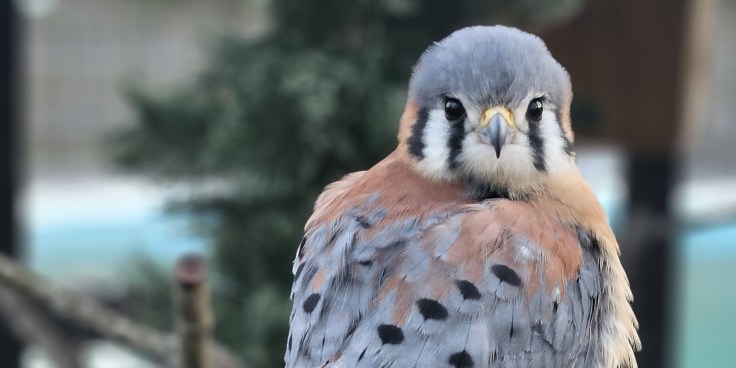
I don’t need any more projects. I have enough on my creative plate to last two additional lifetimes. I have books, videos, writings, podcasts, and other stuff in between I plan to do. My palette is ambitious. However, this class has been fun to kick around some things I have never tried before.
So, with a love for writing things, a love of history, a love of falconry and birds of prey, I set to it on three pieces that I am actually proud of for a rank amateur poet who never intended to write any. I hope you’ll enjoy them, too!
Poem 1: Fly North, White Lady
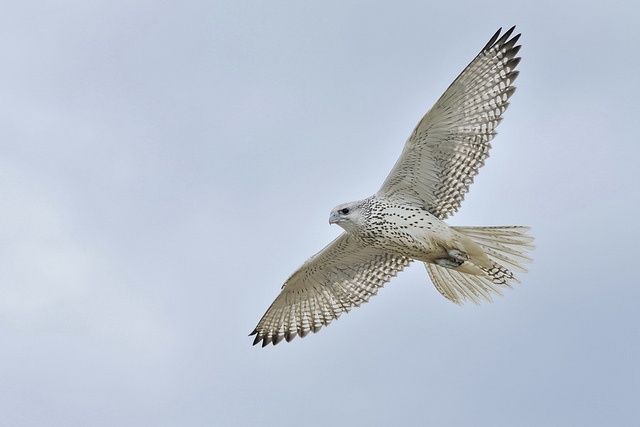
For this first one, I want to travel back in time to a period when warring clans and nations would shower each other with gifts afterward to either curry favor, make amends, or gain allies. Among some of the most kingly gifts that were bestowed were falcons, especially Gyrfalcons. In reading up on Japanese falconry history, I learned that a white Gyrfalcon could only be flown by a male member of the royal family. Even high ranking generals and courtiers could not fly a white falcon. In the Middle East, Gyrfalcons are a kingly gift even to this day. Many of the elite falconers there fly these prized hunters and they are insanely valuable because, first, they were rare in solid white, and two, they are exotic to warm climates.
Gyrs are arctic and cold weather birds, and the largest species of falcon in the world. So, in writing this first poem, I tried to put myself into the mind of a large arctic bird suddenly transported and thrust into a hot and sandy climate with wildly different prey and hunting terrain than I was used to. I originally thought about writing it from the bird’s perspective, but I realized that was not as interesting as writing it from the perspective of a bazyar, which is an old Arabic term for a hawk-keeper.
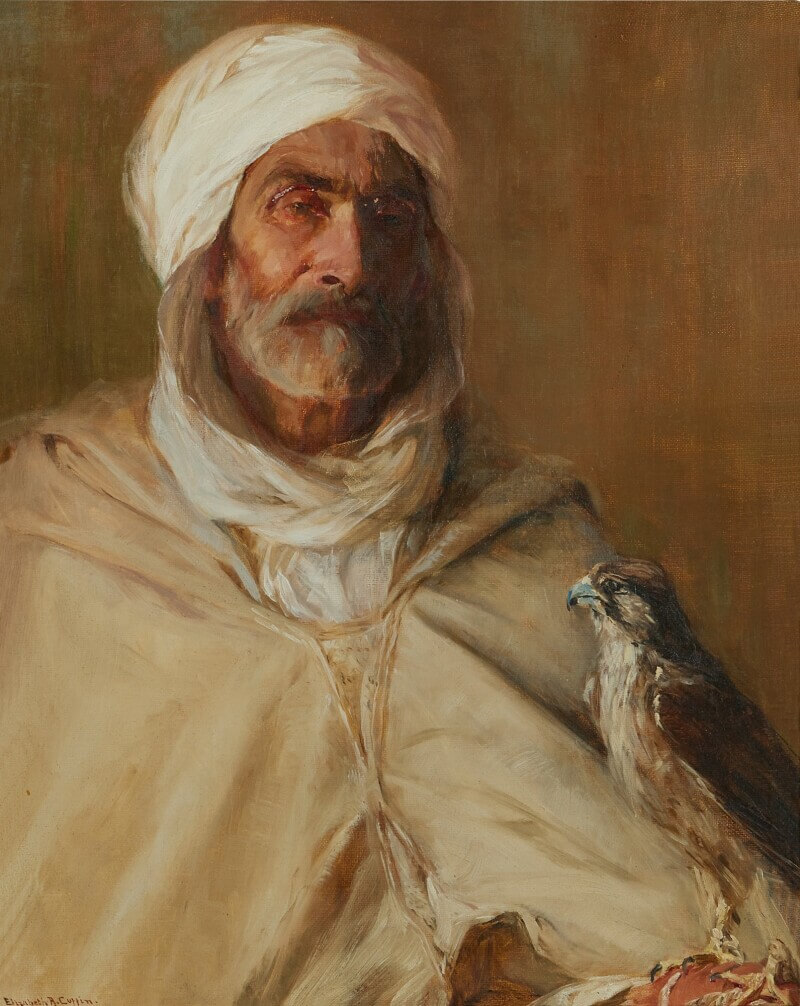
What if a bazyar came to care for a falcon he knew didn’t belong in that climate? And for a king who was not skilled enough to handle one?
What would he do to acclimate it to the arid regions? What kind of desert prey could he substitute for the usual seabirds a gyrfalcon would hunt?
And finally, to raise the stakes, what if he risked his life to help this bird escape? Well, wouldn’t you know it that there was a similar story in history, when over fifty viking longboats raided the city of Seville in Andalusia in 844. That raid didn’t go well for either side, really, and the factions are said to have sent envoys to each other with overtures and gifts of peace. For my poem, I pictured something like this maybe happening in North Africa or further east through the Mediterranean. I know that the vikings made it that far east, but finding intact stories from then are pretty rare. So, when history hands you a mystery, well, you do your best and fill in the blanks. That is led to what you are about to read and I hope you enjoy it.
Fly North, White Lady
They came in the spring when the truce had been sworn,
long ships up the river, their red sails torn,
and out of the hold, in a hood stitched with gold,
came a gyrfalcon as white as the north wind is cold.
The king held her aloft like a sharp and jeweled blade,
a prize to be shown in the palm court shade.
She bated, he shook her, he swore at her head,
and I knew by midsummer, the white lady was dead.
Turn north, white lady, the sea road is long,
the summer comes hard here, the sun is too strong.
I can’t fly you home, and I can’t bid you stay,
but you’ll not live here long, past the first burning day.
I hung soaking linen to cool the mews air,
I weighed her each night on the scale by the stair,
and I noted her weights like a sacred-held vow,
as my father once taught me, and I keep it now.
The night before hunting, the king sent his word:
“At dawn on the wadi, we fly the white bird.”
I went to the mews with a lamp and my knife,
and I cut her a supper to last her a life.
Turn north, white lady, the sea road is long,
the summer comes hard here, the sun is too strong.
I can’t fly you home, but here you can’t stay,
but I’ll not keep you long, you’re soon on your way.
I drew off her hood, stroked a plume down her breast,
and she leaned to my hand, and she roused up to rest.
“Whatever it costs me, despite his demands,
you belong to the snows and not to the sands.”
The king slipped her at houbara over the dune;
she gave it no glance, and she flew on alone.
She rang up and up toward the scorching white sun,
then swept away north, and the king’s hunt was done.
Fly north, white lady, for the journey is long,
When summer arrives, you’ll already be gone.
I can’t fly you home, but here you can’t stay,
I’ve kept my promise, you’re now on your way.
They brought me in chains to the cool of the hall,
and he named me a traitor in front of them all.
He said I had trained her to fly from his hand,
and I said not a word. I let the charge stand.
So I’ll tell it to you, for the king never knew:
I fed her too heavy. His charges were true.
Hungry falcons return when the lure’s swung round;
a full one goes up, and she doesn’t come down.
Fly north, white lady, for your road home is long,
you may fall on the crossing, but your wings are strong.
Better dead on the winds than alive at his side.
I kept my promise to you, and for it, I’ll die.
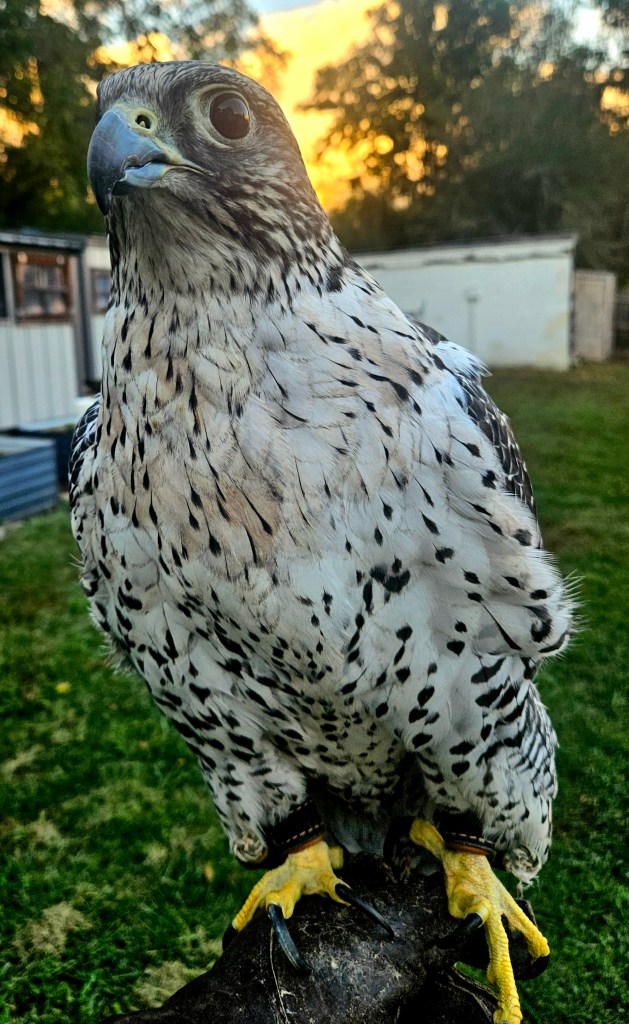
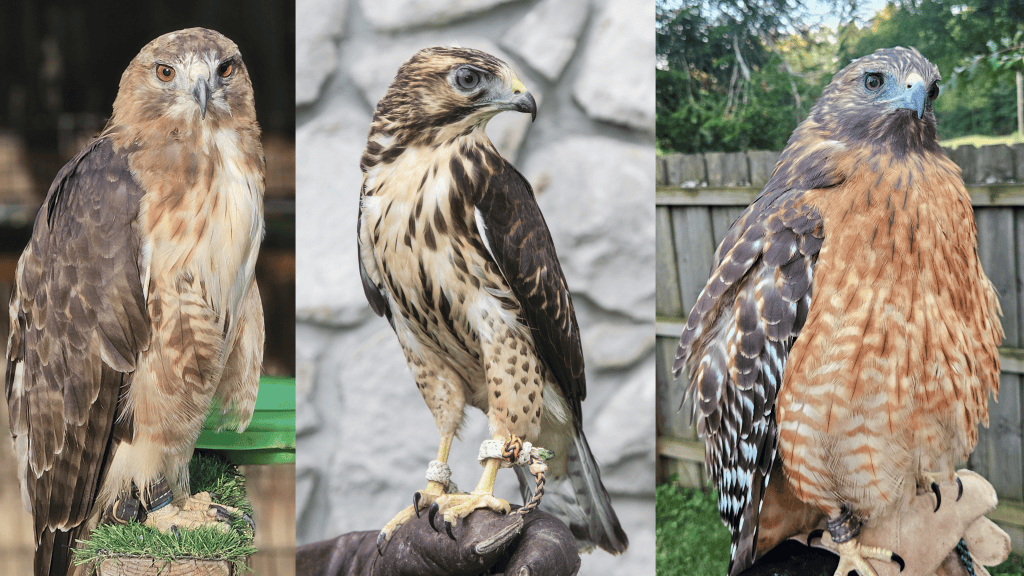
We have a Gyrfalcon named Frejya, and she is beautiful. She’s a grey-color instead of the regal white of olde, but stunning nonetheless. During the hot Tennessee summers, we bring her inside to an indoor perch to keep cool. She then spends the winter in her mews outside and she loves it. I tried to picture what it might have been like for her in that situation, and then put myself in the role of the bazyar. Would I do the same thing? Who knows, but it was fun to write. I also decided to make a video production of it. Full Disclosure: I used a mix of stock footage and AI components to make it.
Poem 2: Eyrie of the Broken
For my next stab at a poem, we were challenged to write a pantoum. If you aren’t familiar, a pantoum has a unique repetitive structure and doesn’t necessarily have to rhyme. I decided to keep this one in modern times and write about three of our current non-releasable education ambassador hawks: Sewanee, Jonathan, and Petrie. Though I am happy with my final result, this format made me realize pretty fast that pantoum poetry isn’t really my speed. However, while researching, I read some really good ones. Those who are good at these are really good. Then there are those like me, but it was still fun to practice writing in this style.
Eyrie of the Broken
You cannot keep a wild thing, or so the falconers say.
Yet you hold what was never yours to hold.
Now the mending is the hunt. The healing replaces flight.
But the sky has closed its door on these, and here they will remain.
Yet you hold what was never yours to hold.
Sewanee took a bullet and outlived all the doubt.
But the sky has closed its door on these, and here they will remain.
Never to soar again, but a new purpose waits in store.
Sewanee took a bullet and outlived all the doubt.
Petrie, mended small and young, kept his wings to fly.
Never to soar again, but a new purpose waits in store.
Now human-bound and teaching us about others in the skies.
Petrie, mended small and young, kept his wings to fly.
Jonathan could not stand for half a year, nor grow a single feather.
Now human-bound and teaching us about others in the skies.
He is nearly two, feathered whole at last, beautiful, and with only half his sight.
Jonathan could not stand for half a year, nor grow a single feather.
For these three, their flying days are over.
He is nearly two, feathered whole at last, beautiful, and with only half his sight.
Their eyrie is no high perch now; it is an earthly home and my glove.
For these three, their flying days are over.
Now the mending is the hunt. The healing replaces flight.
Their eyrie is no high perch now; it is an earthly home and my glove.
You cannot keep a wild thing, or so the falconers say.
As you can see, the first and third line of each stanza become the second and fourth of the next. The ones who are really good at these can make them rhyme and make the story coherent without missing a beat. If you’ve never looked one up or tried it, I highly recommend it. It’s a great word game and you will agonize a few times in the course of writing it about what stays and what goes. It is a great writing exercise.
Poem 3: The Old Falconer
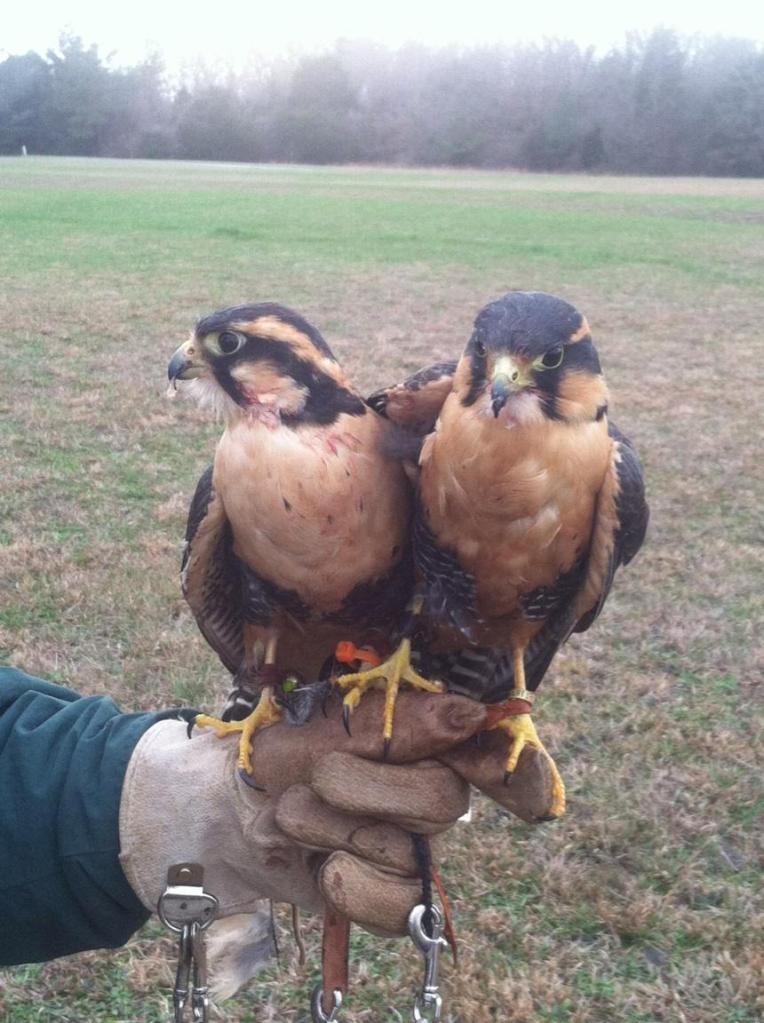
Watching a falcon hunt is one of the most exciting things you will ever see on this earth. The first one I ever got to watch in flight was an Aplomado Falcon named Piper, who trained off of a lure attached to a drone. The poetry of motion was extraordinary. It’s one of those things you can describe and yet do it no justice until you see it for yourself.
Since the sport of Falconry has been around between three and four-thousand years, I could only imagine the passed down knowledge from those many years ago trailing through time to our modern age when a master falconer takes on a new apprentice to teach them these ancient ways. In my experience around birds of prey, I don’t think much has changed on the bird’s end of things. As humans have modernized, our end changes drastically every so often. For the passage of that knowledge, someone has to take up the generational mantle and keep it alive. Working with raptors is not easy. They require specialized care, specific diets, regular exercise, enrichment activities, proper housing, and the list goes on. This is not something you just know. You have to learn it.
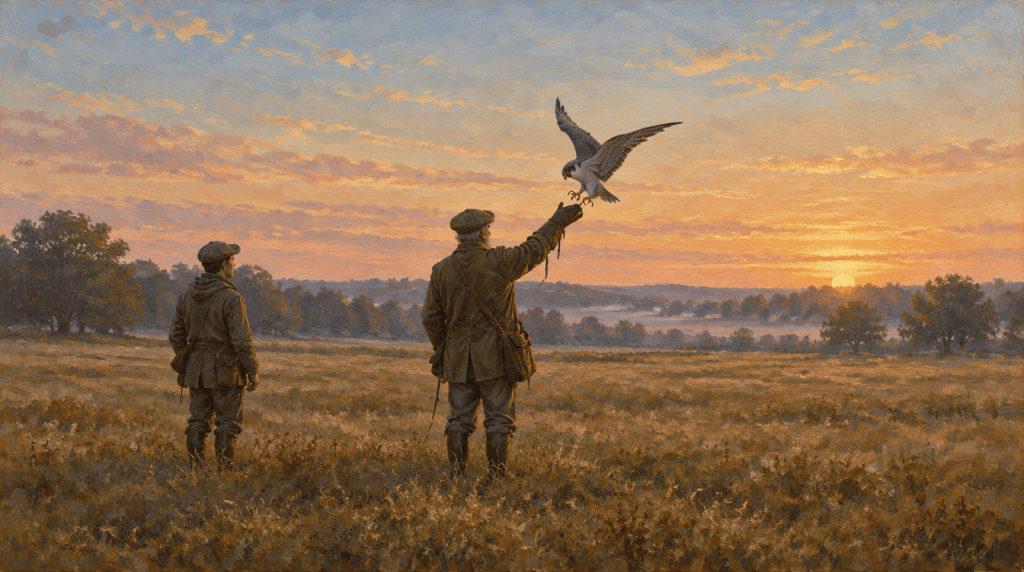
In writing this one, I took on a poet-favorite, the villanelle. A villanelle has a specific repeating and rhyming pattern, and you only have nineteen lines to get it right. I struggled with this one. Finding word groups that rhyme over nineteen specific lines is not a simple task. You get some minor latitude with similar rhymes, and even modern versions have abandoned rhyme altogether. I didn’t really like that style so I chose to stick with the harder wordplay of rhyming. Then I realized how hard that really is and just did my best to make it make sense to the reader.
The Old Falconer
This leather knew a thousand hands before mine;
Scored by sharpened talons deep and dark.
I am the latest link in an old line.

She circles high, and scans for a sign;
Then her keen eyes find their mark.
This leather knew a thousand hands before mine.

Her malar stripes have cut the shine;
In a stoop, she takes a meadowlark.
I am the latest link in an old line.

She returns to me, though she is not mine;
No glove will ever own that wild heart.
This leather knew a thousand hands before mine.

Four thousand years of hood, bell, and twine,
perched on the arm of many a monarch.
I am the latest link in an old line.

My apprentice watches, biding time,
and soon a younger hand will learn her arc.
This leather will know a thousand hands past mine;
As I forge the next link in an old line.
As you can see, it is not easy. But I love a challenge. Though I think I hit the correctness of form, the content could be better. But hey, that’s alright. Mozart wasn’t born playing a piano (was he?) In any case, even to become a master of something, there has to be a teacher along the way. Another master, someone who knows the mistakes you’re going to make and can see them coming. Someone to keep you in the lines and keep you motivated. That’s how the links in old lines are formed. I’m a firm believer that iron sharpens iron, and I think these iron poem challenges helped me elevate the way I approach some of my writing these days. I don’t foresee ever releasing a volume of these little lyrical monsters and I admire those who know how to deftly navigate those poetic waters.
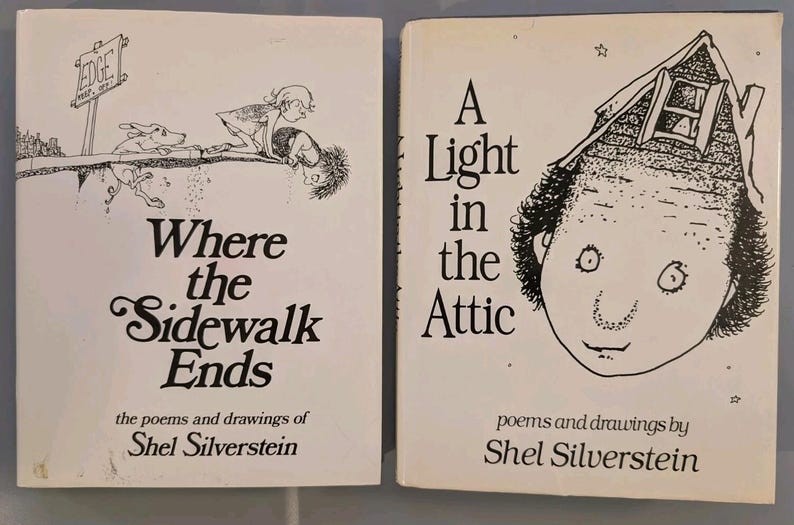
As I reflected on these, I was reminded of a time when I was in elementary school. Some of my classmates and I discovered the works of Shel Silverstein through two poetry books, A Light in the Attic and Where the Sidewalk Ends. Myself and another classmate named Ronald would footrace to the library to be the first to get the newest Hardy Boys mystery or the new Choose-Your-Own-Adventure books (well, they were new at that time!) on the shelf. Then, one day, I found Where the Sidewalk Ends, and that set off a whole new reason to race to the library to see who could get it first. What that reflection reminded me of was a simple joy in reading, whether it was something newly written, new to the book shelf, or and old book that was just new to you, there was excitement in cracking a book.
As the modern world turns at a more furious pace and we find ourselves marketed to death by AI slop, one place that AI hasn’t touched yet is the existing paper volume on your shelf. I appreciate you reading this now, but I challenge you to do the following: Shut off the screen. Close the laptop. Power down your tablet. Disconnect, and then pick up a book. I mean a real book. The kind with paper pages and such. There’s a whole world in there waiting for you to find it. Read for the joy of reading, be it poetry, a novel, an essay, a magazine or a coffee table book. Any of the above will do.
And then, try to write something.
Anything.
A poem. A journal entry. A thank-you card. A letter to someone. We all have the ability but we don’t practice it. If you find something you like to read, pick a character in it that didn’t get much page time. Write a profile. Where are they from? Where did they go to school? What was their home life like? What did they do the day before they showed up on the page of your book?
And here’s a final challenge to you: Create more than you consume. Humanity needs more creators. Art, poetry, wood working, leather goods, cakes, writings, videos, the sky and your imagination are the only limits. Until then, you’ll find me here, trying to figure out line 12 of a villanelle.


Leave a Reply